Our aim is to make our training programs accessible and affordable for all. We have therefore chosen to adapt all our training fees according to the purchasing power of different regions (currencies). For information about the training fee in your currency, please enter your country of residence and your country’s currency in the fields below
What gets lost within and between your teams?
How behaviour shapes what teams notice, share and use
People across organisations are working in the midst of rapid and interconnected change. At the same time, teams are becoming more varied and dispersed, bringing together people with different experiences, expectations and ways of seeing.
Change does not enter an organisation as one clearly defined challenge, different people and teams encounter different aspects of what is happening. What creates opportunity for one may create disruption or uncertainty for another, and not everybody sees the change at the same time.
Somewhere in your organisation, someone has already noticed something important...
The person working in IT may already be thinking about a new technological possibility. HR and L&D may be reflecting on how roles, skills and ways of working will need to evolve. Finance is considering the commercial and cost implications, whilst Operations is quietly asking what will actually work in practice. Those closest to customers and service users are often the first to recognise changing needs, sometimes long before the rest of the organisation catches up.
Information, experience and expertise already exist throughout the organisation. The challenge is whether teams are able to bring those different perspectives together, make sense of them collectively and turn them into better decisions.
Not everyone sees, or responds to, the same thing
Familiar stories about change have captured this for years. In Spencer Johnson’s Who Moved My Cheese?, Sniff detects change early, Scurry acts immediately, Hem denies and resists, and Haw initially remains stuck before reconsidering his behaviour and adapting. In John Kotter and Holger Rathgeber’s Our Iceberg Is Melting, Fred sees signs of danger while NoNo dismisses the threat.
We recognise these responses because people do not notice or interpret change in the same way, but they should not be reduced to categories of good and bad behaviour. Early detection is valuable, but, noticing alone changes nothing. Immediate action creates movement but may overlook important consequences. Resistance can involve discounting reality while sometimes containing concerns that others are moving too quickly to consider.
The point is not to label people as ‘Sniffs’, ‘Hems’, ‘Freds’ or ‘NoNos’, but to understand what each response may contribute, what it may be discounting and what happens when these different responses meet together within a team.
Within teams: what remains unspoken?
Teams are where individual knowledge can become shared understanding and coordinated action. They are also where information can be defended, dismissed or left unspoken.
Sometimes the barriers are surprisingly subtle - a leader may genuinely invite challenge, yet find themselves becoming defensive when those challenges are voiced, a specialist may become so focused on one area of expertise that other perspectives receive less attention than they deserve or other team members may choose not to speak at all because experience has taught them that uncomfortable truths are rarely welcomed.
The more significant the change feels, the easier it becomes to protect what matters most to us - roles, professional identities or status. Someone who fears that artificial intelligence may diminish the value of their work might minimise its potential. Equally, someone excited by its possibilities may overlook the practical, ethical or organisational questions or consequences it raises.
These responses are human and understandable – but they may also prevent a team from taking account of and using what its members know.
Between teams: what gets lost?
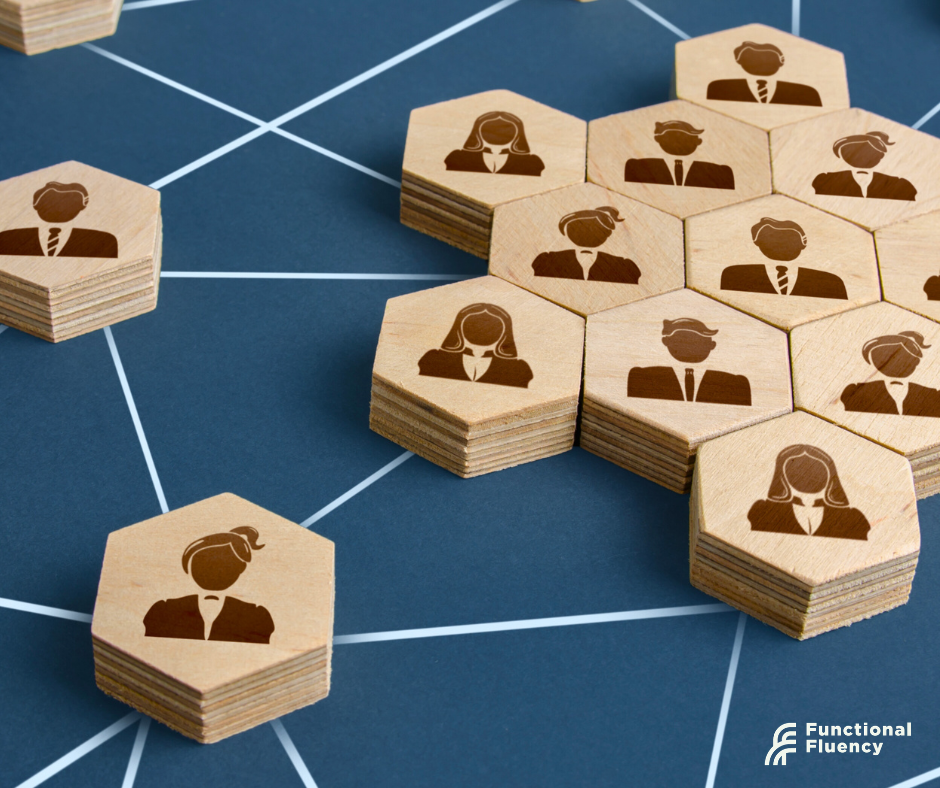
Even when a team makes good use of its own knowledge and experience, those insights do not always travel beyond the team's boundaries.
No team holds the whole picture. Each sees the organisation from a different position, shaped by its expertise, responsibilities, pressures and interests. Teams may also compete for resources, influence or survival.
What works well for one team does not always work as well for another. An efficiency gained in one part of the organisation may create additional work elsewhere, and a decision that solves one problem may unintentionally create another. Many organisational challenges are not owned by a single team at all, they emerge in the spaces where teams interact with one another.
The senior leadership team holds a particular responsibility for connecting these different realities, however, its members cannot take account of the whole simply by combining reports from their respective areas. They need to understand the dependencies, tensions and consequences across the wider system of teams.
When understanding remains within individual teams, organisations lose the opportunity to make sense of it collectively. Conversations are often repeated, work duplicated and decisions are revisited because different parts of the organisation are working with different pieces of the picture. Over time, issues begin to fall between organisational boundaries, with no single team feeling responsible for resolving them resulting in time, energy, attention, capability, relationships and money leaking away.
This leak is behavioural.
Are teams taking account?
In Functional Fluency, ‘Accounting’ is the capacity to take account of reality: to notice, think, feel, question assumptions and decide what is relevant in the here and now.
Accounting enables people and teams to engage with information, experience and expertise that might otherwise be discounted. It also involves recognising how hopes, fears, assumptions and interests influence what people notice and what they do with it.
For teams, this means asking:
What do people here know that is not entering the conversation?
What are other teams seeing that we are not?
What might we be minimising because it is inconvenient or threatening?
What are our choices creating elsewhere?
What are we doing with what we discover?
Taking account cannot remain an annual strategic activity or something reserved for a team-development day. It must become part of everyday meetings, decisions and conversations within and between teams, especially when there are rapidly changing circumstances.
Behaviour determines whether information is used intelligently
Taking account is essential, but it is only the first step. Information, whether it comes from people, data or artificial intelligence, does not determine what happens next.
People still need to voice concerns without blaming and listen without immediately becoming defensive. They also need to provide direction without closing down inquiry and remain willing to reconsider decisions. The aim is not to remove disagreement or make everyone behave pleasantly - on the contrary, organisations need people who notice different realities, challenge assumptions and protect what genuinely matters. Functional Fluency provides a practical way to examine how people use their energy and what their behaviour creates. It helps teams develop their capacity to take account, provide appropriate direction and care, work constructively with difference, take responsibility and remain open to changing course.
Systemic team development extends this work beyond communication and relationships within a bounded group. Functional Fluency Systemic Team Developers help teams examine what happens internally and across their boundaries: what they contribute to the wider organisation, what they need from others and how their behaviour affects the system around them.
Sometimes the most important development work happens within a team. Sometimes it is at the interface between teams. Frequently, it is both.
It’s not a test to see whether people had an interesting team-development experience or not. It is to see whether teams increasingly take account of what is available, connect their different realities and use what they discover to achieve what matters most.
The information, experience and expertise are there.
What is being lost within and between your teams, and what is that costing you or your organisation?
Developing teams that can take account and act together
Functional Fluency Systemic Team Development connects behaviour with team purpose, roles, relationships, organisational reality and the value teams exist to create.
If you work with teams and want to strengthen your capacity to help them take account, work across boundaries and take action, together, discover our program for systemic team developers.